

Imagine yourself in a university lab in Bengaluru, peering into a microscope late at night. An experiment isn’t working using the standard method, and you think, “There has to be a better way.” That spark—identifying a problem and envisioning a solution—is how many biotech startups begin.
Today, more scientists and innovators, both in India and around the world, are taking the leap from the lab bench to the marketplace. This guide is the first in a series on building a biotech startup from India. Let’s start at the beginning: understanding the landscape, valuing your scientific background, and finding the right idea to work on. Future posts will cover funding, building a team, intellectual property, and bringing your product to market. But first things first—let’s lay the foundation for your biotech entrepreneurship journey.
The Global Rise of Biotech Startups
Biotechnology entrepreneurship is booming worldwide. The biotech industry is growing at an unprecedented pace. In 2020 alone, 74 biotech startups went public—a record number that illustrates the surge in innovation. From North America to Europe to Asia, new companies are forming to tackle challenges in healthcare, agriculture, energy, and materials.
In the United States, hubs like Boston and San Francisco have nurtured countless startups, often spinning out of top universities. Europe has its own success stories, like BioNTech in Germany, which developed the first mRNA COVID-19 vaccine. These stories inspire researchers to think beyond academic papers and consider entrepreneurship.
Asia is also emerging as a strong biotech hub. South Korea has invested heavily in creating bio-clusters and supporting R&D, resulting in an impressive pipeline of biosimilar drugs. Japan is seeing a rise in innovative startups like Spiber, which uses synthetic spider silk to develop sustainable materials. The takeaway? Whether you’re in India or anywhere else, the environment is increasingly supportive of biotech entrepreneurship.
India’s Biotech Landscape: Opportunities and Inspiration
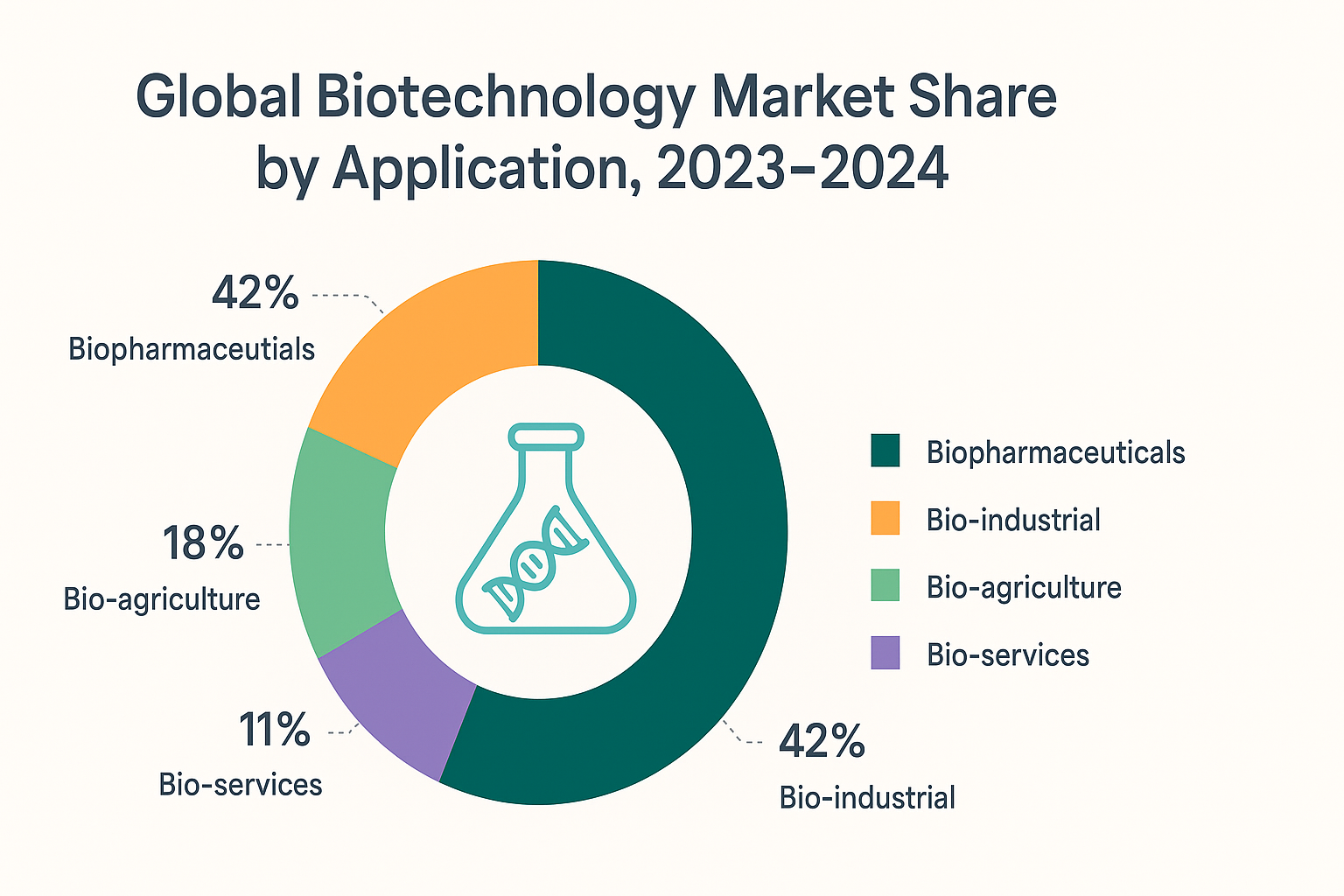
Closer to home, India’s biotech sector is experiencing rapid growth. The Indian government has identified biotech as a strategic area for innovation and economic growth. By 2024, India’s bioeconomy reached $130 billion—ten times higher than just a decade ago. The BioE3 initiative aims to grow this even further, targeting $300 billion by 2030.
This support means more grants, incubators, and innovation challenges for life science entrepreneurs. Universities and research institutes are encouraging scientists to turn discoveries into startups.
India is producing success stories too. For example:
- Bugworks Research, founded by scientists in Bengaluru, is developing new antibiotics to fight drug-resistant superbugs.
- String Bio, also in Bengaluru, uses microbes to convert methane into protein for animal feed—a win for both food security and sustainability.
These examples show that Indian startups can tackle real-world problems with innovative solutions.
Education and Research: Your Superpowers
If you come from a scientific or medical background, your education and research experience are your biggest assets. Unlike some tech startups where college dropouts can succeed, biotech requires deep technical knowledge. Most biotech CEOs hold advanced degrees like PhDs or MDs.
Years of research, failed experiments, and constant learning prepare you for the complexities of biotech product development. If you’re a PhD student, postdoc, or young scientist, you’re in the perfect position to identify startup opportunities. Many successful biotech companies started as academic projects. Your scientific foundation gives you credibility and ensures you truly understand the technology behind your startup.
How to Find a Great Startup Idea
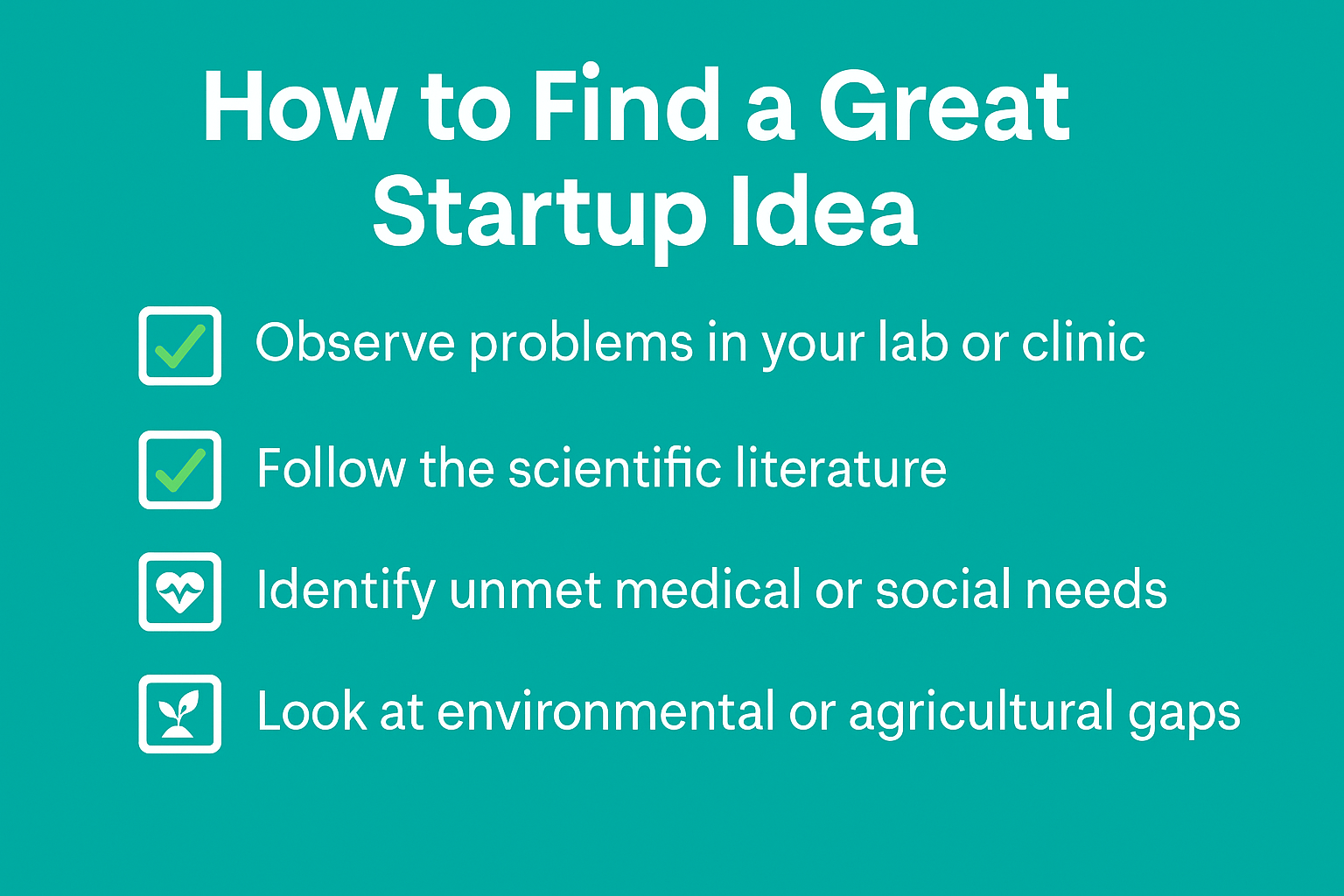
Every great biotech startup starts with a problem worth solving. Here’s how to find yours:
- Observe Problems in Your Lab or Clinic
Think about daily challenges like unreliable tools, slow processes, or expensive reagents. Solving a small lab problem can lead to a viable product. - Follow Scientific Literature
Stay updated on new discoveries. Could they be turned into products or therapies? Sometimes your thesis work itself can be the seed for a startup. - Identify Unmet Medical or Social Needs
Are there diseases without effective treatments? Could you develop a low-cost diagnostic or vaccine? Talk to doctors, patients, and public health experts. - Look at Environmental and Agricultural Gaps
Can your research help with climate change, agriculture, or waste management? Startups like String Bio show that tackling environmental issues can lead to business opportunities.
Brainstorm multiple ideas before choosing one. Talk to mentors and colleagues, and do basic research to see if others have tried similar solutions. You don’t need a business plan at this stage—just a clear, science-based idea that excites you.
From Idea to Action: First Steps
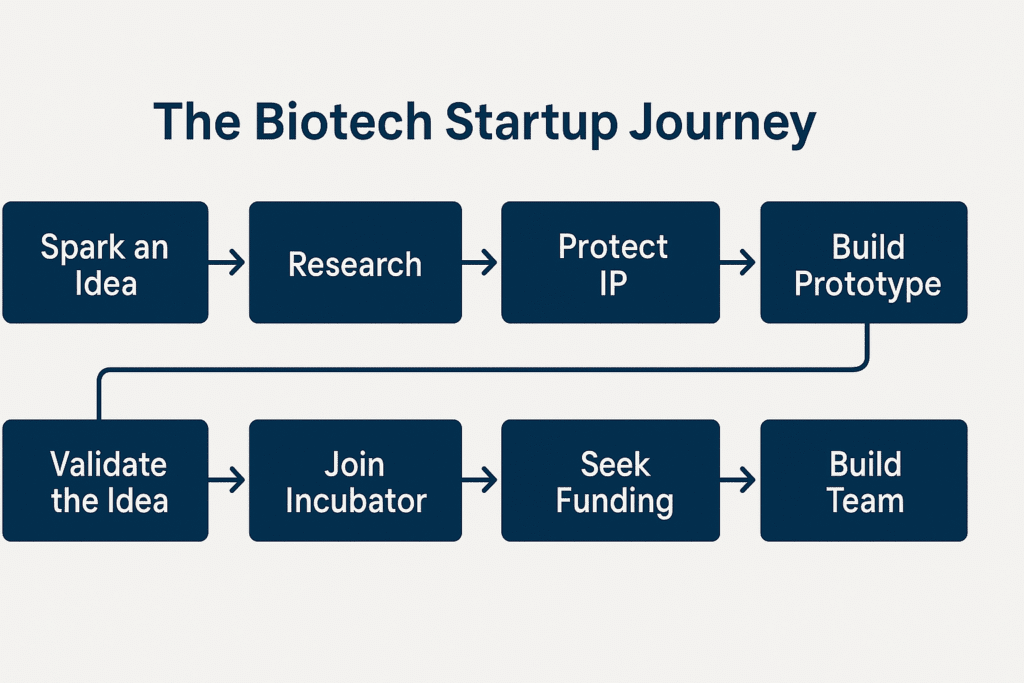
Once you have an idea, it’s time to move from the drawing board to the real world.
- Dive Deeper into Research
Conduct a thorough literature review to ensure your idea is novel or significantly better than existing solutions. Run small lab experiments or simulations to build proof-of-concept data. - Consider Intellectual Property (IP)
Think about what might be patentable: a molecule, process, or product. Talk to your university’s tech transfer office for guidance. - Find Mentors and Build a Network
Connect with professors, industry experts, and alumni who’ve launched companies. Their feedback and guidance can be invaluable. - Develop a Prototype
Even a small lab result can show that your idea is feasible. A simple prototype helps attract partners and investors later. - Join an Incubator or Startup Program
These offer lab space, equipment, and mentorship. Look into programs through BIRAC, IITs, IISc, or even virtual accelerators.
Laying the Groundwork for Success
Starting a biotech startup is challenging but rewarding. This first post covered the essential first steps: understanding the global and Indian biotech landscape, valuing your scientific background, and finding the right problem to solve.
Think of this stage as planting a seed: your idea is the seed, and your knowledge and research are the soil. Patience and persistence will help it grow. Remember, you’re not alone. A community of scientist-entrepreneurs in India and around the world is learning and growing together.
In the next parts of this series, we’ll talk about funding, building a team, protecting your IP, and bringing your product to market. Each step has its challenges, but with the foundation you’ve laid, you’ll be ready to tackle them.
For now, celebrate that you’ve started this journey. The world needs biotech innovators like you. Keep dreaming, experimenting, and learning. The next big biotech breakthrough might just come from your lab.
Suggested Reading and Helpful Citations
- NITI Aayog. “India’s Bioeconomy Report 2022.”
- Bugworks Research. “Pioneering Antibiotics Against Superbugs.”
- String Bio. “Biotech Solutions for Sustainable Protein.”
- BIRAC (Biotechnology Industry Research Assistance Council). “BioNEST Incubators and Startup Programs.”
- BioNTech SE. “Founding and Growth Story.”
- V-Bio Ventures. “Patenting Strategies for Biotech Startups.”
- National Biotechnology Development Strategy of India.
Follow the rest of the blog series on BioCareersHub for more insights on building your biotech startup. Stay tuned for future posts on funding, team-building, and market strategies.
Like us on Facebook and Instagram to get the latest updates and connect with a community of aspiring biotech entrepreneurs.
2 thoughts on “Starting a Biotech Startup in 2025: A Guide for Aspiring Indian Entrepreneurs”